Professional Water Damage Restoration in Fort Smith, AR
Fort Smith Water Damage Restoration provides certified water damage restoration in Fort Smith, AR, serving homes and businesses across Sebastian County. Fort Smith’s humid subtropical climate—with average summer humidity above 70% and proximity to the Arkansas River—makes properties in neighborhoods like Massard, Barling, and the downtown riverfront corridor especially vulnerable to water intrusion, flash flooding, and mold growth that can begin within 24 to 48 hours of exposure.
Many Fort Smith homes were built in the 1950s through 1970s with older plumbing systems and wood-frame construction prone to hidden leaks. Winter temperatures that dip below freezing cause pipe bursts in crawl spaces and attics throughout zip codes 72901, 72903, and 72904. Commercial properties along Garrison Avenue and the riverfront face additional risks from aging municipal sewer infrastructure and storm surge during spring flood season.
Our Fort Smith water damage restoration services cover every phase from emergency water extraction through structural drying, antimicrobial treatment, and full reconstruction. Call (479) 239-8187 any time—day or night—for emergency water damage restoration in Fort Smith with a guaranteed response in under 60 minutes.
📞 Get Help Now — (479) 239-8187
Water Damage Restoration Service Specifications
Fort Smith Water Damage Restoration documents every project with moisture readings, photographic evidence, and detailed scope-of-work reports for your records and insurance carrier.
- Response Time:
- Under 60 minutes to any Fort Smith address, 24 hours a day, 7 days a week, 365 days a year
- Service Area:
- Fort Smith (72901, 72903, 72904), Barling (72936), Lavaca (72941), Greenwood (72936), Van Buren (72956), and all of Sebastian County
- Certifications:
- IICRC Water Damage Restoration Technician (WRT), IICRC Applied Microbial Remediation Technician (AMRT)
- Equipment & Technology:
- Truck-mounted water extractors, LGR dehumidifiers, axial air movers, infrared moisture meters, thermo-hygrometers, hydroxyl generators
- Pricing:
- Extraction starts at approximately $500; structural drying averages $2–$5 per sq ft; full restoration projects typically range from $1,500 to $10,000+ depending on scope and water category
- Insurance:
- Direct billing with all major carriers; on-site documentation for claims; assistance filing with Arkansas-based and national insurers
- Guarantee:
- 1-year written workmanship warranty on all restoration and reconstruction; moisture verification before project sign-off
Common Causes of Water Damage in Fort Smith Homes & Businesses
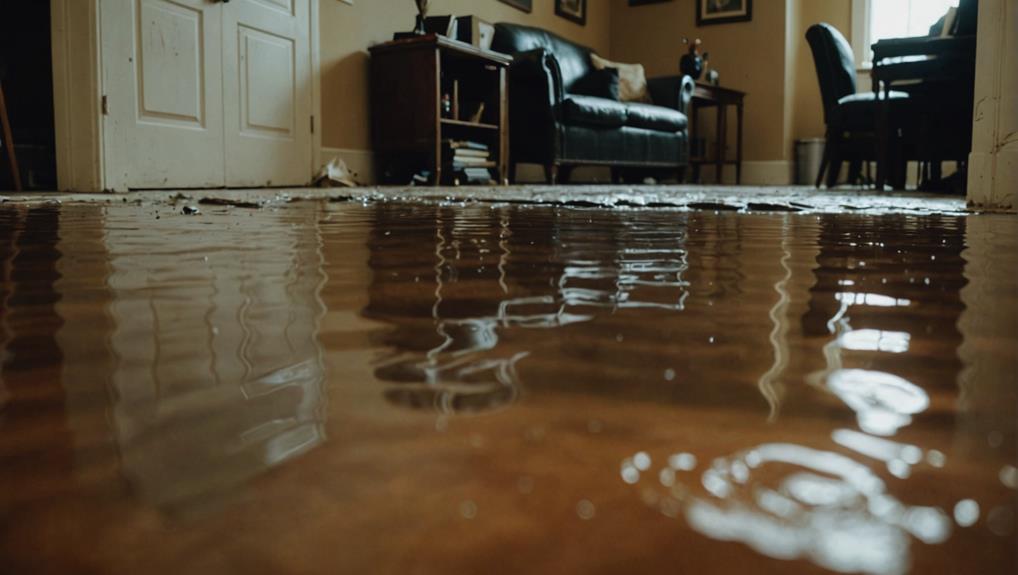
Fort Smith’s location in the Arkansas River valley, combined with aging residential infrastructure and humid summers, creates multiple water damage risks unique to Sebastian County properties.
Burst Pipes & Plumbing Failures
Fort Smith winter lows drop below 20°F, causing pipes in crawl spaces and attics to freeze and rupture. Homes built in the 1950s through 1970s in neighborhoods like Massard and south Fort Smith often have galvanized steel or polybutylene plumbing that deteriorates with age. A single burst pipe can release 400+ gallons per hour into walls and subfloors.
Arkansas River Flooding & Storm Surge
Properties along the Arkansas River corridor and in low-lying areas near Lee Creek face flash flood risk during spring and early summer storms. The 2019 Arkansas River flood reached historic levels in Fort Smith, and the National Weather Service continues to classify portions of Sebastian County as flood-prone zones. Storm surges push Category 2 and Category 3 water into basements and ground floors.
Sewage Backups & Drain Overflows
Fort Smith’s aging municipal sewer system, particularly in the older downtown core and areas near Garrison Avenue, is susceptible to backups during heavy rainfall. Sewage backups introduce Category 3 “black water” containing bacteria, viruses, and parasites that require specialized extraction and antimicrobial treatment. These events demand immediate professional response to protect occupant health.
Appliance Leaks & Hidden Moisture
Water heaters, dishwashers, and washing machines in Fort Smith homes average 8–12 years of service before failure. Slow leaks behind walls in Barling and Greenwood residences can go undetected for weeks, saturating drywall and fostering mold colonies. Fort Smith’s average summer humidity above 70% accelerates mold growth within 24–48 hours of initial moisture exposure.
Our 7-Step Water Damage Restoration Process
Our certified water damage restoration process in Fort Smith, AR follows IICRC S500 standards, with each phase documented by moisture readings and photographic evidence for your insurance claim.
-
Step 1: Emergency Contact & Dispatch
Call (479) 239-8187 any time. Our Fort Smith dispatch team gathers details about the water source, affected area size, and property access. A certified technician is dispatched to your location within minutes, with arrival guaranteed in under 60 minutes anywhere in Sebastian County.
-
Step 2: On-Site Inspection & Damage Assessment
Technicians use infrared cameras and pin-type moisture meters to map the full extent of water penetration behind walls, under floors, and in ceilings. We classify the water category (1 through 3) and damage class (1 through 4) per IICRC standards. A written scope of work and cost estimate are provided before any restoration begins.
-
Step 3: Standing Water Extraction
Truck-mounted extractors remove standing water at rates exceeding 25 gallons per minute. Submersible pumps handle basement flooding common in Massard and riverfront Fort Smith properties. Extraction typically reduces moisture content by 80%+ within the first 2–4 hours of arrival.
-
Step 4: Structural Drying & Dehumidification
LGR (low-grain refrigerant) dehumidifiers and high-velocity air movers are positioned according to IICRC drying protocols. We monitor grain depression, temperature, and relative humidity twice daily. Most Fort Smith properties reach target dryness within 3–5 days, verified by moisture meter readings below manufacturer thresholds.
-
Step 5: Cleaning & Antimicrobial Treatment
All affected surfaces are cleaned with EPA-registered antimicrobial agents to eliminate bacteria and inhibit mold growth. Category 2 and Category 3 events require removal of contaminated porous materials such as carpet padding, insulation, and damaged drywall. Air scrubbers with HEPA filtration run continuously to capture airborne particulates.
-
Step 6: Moisture Verification & Clearance Testing
Before reconstruction begins, we conduct a full moisture verification using thermo-hygrometers and deep-wall probes. Every affected area must register moisture readings at or below dry standard before clearance. Documentation of final readings is provided to your insurance adjuster for claim approval.
-
Step 7: Reconstruction & Final Restoration
Licensed contractors rebuild damaged structures including drywall, flooring, baseboards, cabinetry, and paint to pre-loss condition. We coordinate directly with your insurance carrier on approved materials and scope. All reconstruction carries a 1-year written workmanship warranty with a final walk-through inspection.
Timeline & Costs for Fort Smith Water Damage Restoration Projects
Water damage restoration costs in Fort Smith, AR vary based on the water category, affected square footage, materials involved, and whether structural reconstruction is required. Below are typical ranges for Sebastian County projects.
| Project Type | Common Cause | Typical Area | Estimated Cost | Typical Timeline |
|---|---|---|---|---|
| Minor Water Damage | Appliance leak or small pipe burst | 50–150 sq ft | $1,500–$3,000 | 2–4 days |
| Moderate Water Damage | Burst pipe affecting multiple rooms | 150–500 sq ft | $3,000–$6,000 | 4–7 days |
| Major Flood Damage | Storm flooding or Arkansas River surge | 500–1,500 sq ft | $6,000–$15,000 | 1–3 weeks |
| Category 3 Sewage Backup | Sewer line failure or storm overflow | 200–800 sq ft | $4,000–$12,000 | 5–14 days |
Estimates are based on typical Fort Smith, AR projects and may vary depending on water category, material types, accessibility, and insurance coverage. A written estimate is provided on-site before work begins. No hidden fees.
Why Choose Fort Smith Water Damage Restoration
Fort Smith Water Damage Restoration combines IICRC-certified expertise, sub-60-minute response times, and direct insurance billing to deliver documented, warranty-backed restoration for Sebastian County properties. Every project follows IICRC S500 standards with twice-daily moisture monitoring and written clearance verification.
IICRC-Certified Technicians
Every technician holds current IICRC Water Damage Restoration Technician (WRT) certification. Our team follows IICRC S500 standards for water damage restoration and S520 standards for mold remediation. Certification numbers are provided on every project scope document.
Guaranteed Sub-60-Minute Response
We guarantee arrival at any Fort Smith address within 60 minutes of your call, 24 hours a day. Our dispatch center at (479) 239-8187 operates around the clock, including holidays. Response time is logged and documented for every emergency call.
Direct Insurance Claims Filing
We document every phase with timestamped photos, moisture readings, and itemized scope-of-work reports formatted for insurance adjusters. Our team files claims directly with your carrier and coordinates supplement requests. This process has supported approval on Fort Smith-area claims consistently.
1-Year Written Workmanship Warranty
All restoration and reconstruction work carries a 1-year written warranty covering materials and labor. If any warranted repair fails within 12 months, we return at no additional cost. Warranty documentation is provided at project completion with clear terms and contact information.
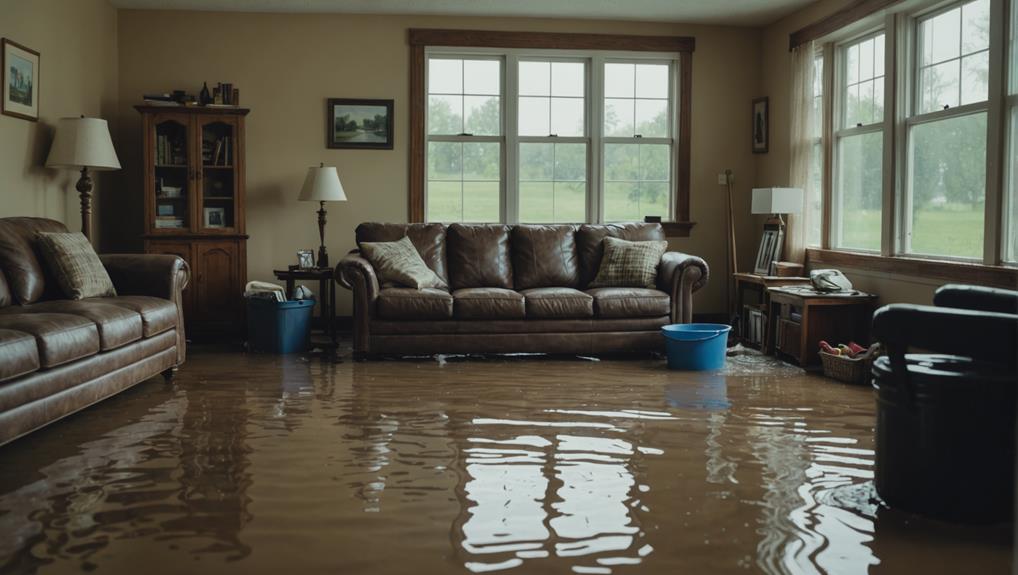
DIY vs. Professional Water Damage Restoration Comparison
| Factor | DIY Approach | Professional Restoration |
|---|---|---|
| Water Extraction Speed | ✗ Shop vac removes 1–2 gallons per minute; manual mopping for large areas | ✓ Truck-mounted extractors remove 25+ gallons per minute across the full affected area |
| Drying Effectiveness | ✗ Box fans and household dehumidifiers; unmonitored; often leaves hidden moisture | ✓ LGR dehumidifiers and air movers placed per IICRC protocol; twice-daily moisture readings until clearance |
| Mold Prevention | ✗ High risk—undetected moisture behind walls leads to mold within 24–48 hours | ✓ Infrared cameras locate hidden moisture; antimicrobial treatment and HEPA air scrubbing prevent mold growth |
| Hidden Damage Detection | ✗ Visual inspection only; cannot see inside walls, under flooring, or above ceilings | ✓ Infrared thermal imaging and pin-type moisture meters detect saturation behind surfaces |
| Insurance Documentation | ✗ Self-taken photos with no standardized reporting; claims frequently underpaid or denied | ✓ Timestamped photographic evidence, moisture logs, and itemized scope reports formatted for adjuster review |
| Cost Comparison | ✗ Lower upfront cost ($200–$500 in rental equipment); high risk of $5,000–$20,000 in secondary mold or structural damage | ✓ Typical investment of $1,500–$10,000 with documented drying, warranty-backed repairs, and insurance coverage support |
What to Expect When You Call
When you call (479) 239-8187, our Fort Smith dispatch team collects information about the water source and affected areas, then sends an IICRC-certified technician to your property within 60 minutes. On arrival, the technician conducts an infrared moisture survey, classifies the damage, and provides a written estimate before starting extraction. Throughout the drying phase, you receive twice-daily progress updates with moisture readings. After clearance testing confirms the structure is dry, our reconstruction crew restores your property to pre-loss condition with a 1-year written warranty.
Common Water Damage Restoration Project in Fort Smith
📍 Typical Water Damage Restoration Project: Basement Flood After Arkansas River Flash Storm
- Typical Scenario:
- A Massard neighborhood homeowner discovered 3 inches of standing water in a 200 sq ft basement after a spring thunderstorm overwhelmed the sump pump. Category 2 stormwater had saturated the carpet, drywall up to 18 inches, and stored belongings. The homeowner called at 11 p.m. on a weeknight.
- Our Approach:
- A certified technician arrived within 45 minutes and extracted approximately 900 gallons using a truck-mounted extractor. Ten LGR dehumidifiers and eight air movers were placed per IICRC drying protocol. Contaminated carpet padding and lower drywall sections were removed, and all surfaces received EPA-registered antimicrobial treatment.
- Typical Outcome:
- The basement reached verified dry standard in 4 days with twice-daily moisture monitoring. Drywall, baseboards, and carpet were replaced within 10 days total. The homeowner’s insurance carrier approved the claim at approximately $8,200 with documentation provided directly by our team. A 1-year workmanship warranty covered all reconstruction. No mold growth was detected at the 30-day follow-up inspection.
Local Fort Smith Water Damage Risks & Prevention
Arkansas River Corridor & Flood-Prone Zones
Properties within a half-mile of the Arkansas River and Lee Creek face elevated flood risk during spring storm season (March through June). The 2019 Arkansas River flood caused record-level damage across Fort Smith, and FEMA flood maps classify portions of the riverfront and south Fort Smith as Zone AE. Homeowners in these areas should verify flood insurance coverage separately from standard homeowners policies, as standard policies exclude flood damage.
Older Neighborhoods & Aging Infrastructure
Homes in Massard, the Midland Boulevard corridor, and south Fort Smith were largely built between 1950 and 1975 with galvanized steel or polybutylene plumbing. These materials corrode and become brittle over time, increasing the risk of sudden pipe failure. Fort Smith’s aging municipal sewer system compounds this risk with storm-related backups that push Category 3 sewage into basements and crawl spaces.
Humid Summers & Mold Growth Timelines
Fort Smith’s humid subtropical climate produces average summer humidity above 70% and temperatures regularly exceeding 90°F. Under these conditions, mold colonization can begin within 24–48 hours of water exposure on porous surfaces like drywall, wood framing, and carpet. Prompt extraction and professional drying are critical to preventing secondary damage that can cost 3–5 times the original restoration expense.
Arkansas Building Codes & Licensing Requirements
Water damage reconstruction in Fort Smith must comply with the Arkansas Fire Prevention Code and local building permits issued through the Fort Smith Building Services Department. Contractors performing structural work must hold a valid license through the Arkansas Contractors Licensing Board. Fort Smith Water Damage Restoration maintains all required state and local licenses for residential and commercial restoration work.
Prevention Checklist for Fort Smith Property Owners
- Inspect plumbing supply lines and water heater connections annually, especially in homes built before 1980
- Install a battery-backup sump pump if your Fort Smith property has a basement or below-grade living space
- Clear gutters and downspouts before spring storm season (March–June) to direct water away from foundations
- Verify your homeowners insurance covers water damage from internal sources and review flood policy limits separately
- Monitor your water bill for unexplained spikes that may indicate hidden leaks behind walls or under slabs
- Maintain indoor humidity below 60% during Fort Smith summers using a dehumidifier rated for your square footage
- Know the location of your main water shut-off valve and test it annually to ensure it operates properly
- Store a copy of (479) 239-8187 for emergency water damage restoration response in under 60 minutes
Insurance Claims Help for Fort Smith Residents
Most homeowners insurance policies in Arkansas cover water damage caused by sudden and accidental events such as burst pipes, appliance failures, and certain storm-related intrusion. However, standard policies typically exclude flood damage, which requires a separate National Flood Insurance Program (NFIP) or private flood policy. Fort Smith properties in FEMA-designated Zone AE along the Arkansas River corridor are strongly encouraged to carry flood coverage even if not required by their mortgage lender.
Fort Smith Water Damage Restoration documents every project with timestamped photographs, daily moisture readings, and itemized scope-of-work reports formatted specifically for insurance adjuster review. Our team files claims directly with your carrier, coordinates on-site adjuster inspections, and prepares supplement documentation when the initial estimate falls short of actual restoration costs. We work with all major carriers serving Sebastian County, including State Farm, Shelter Insurance, Farm Bureau, and Allstate.
Our 5-Step Insurance Claim Process
- Document all damage immediately upon arrival with timestamped photos, video, and written descriptions of affected areas, materials, and water category classification
- File the initial claim with your insurance carrier within 24 hours, providing our detailed scope-of-work report and moisture survey data
- Coordinate the on-site adjuster inspection, walking them through documented damage and providing access to moisture readings and thermal imaging results
- Prepare and submit supplement requests with supporting evidence when the adjuster’s initial estimate does not cover the full documented scope of necessary restoration
- Provide final project documentation including before-and-after photos, clearance moisture readings, and warranty paperwork for your permanent insurance records
What Arkansas Homeowners Insurance Typically Covers
Sudden pipe bursts, accidental appliance overflow, wind-driven rain entering through storm damage, and ice dam-related leaks are generally covered under standard Arkansas homeowners policies. Gradual leaks, deferred maintenance, and flood events require separate coverage. Review your policy declarations page or call your agent to confirm your specific water damage provisions.
Direct Billing & Zero Upfront Cost
Fort Smith Water Damage Restoration bills your insurance carrier directly for covered restoration work. You pay only your policy deductible—we handle all documentation, filing, and adjuster coordination. Call (479) 239-8187 to start the process immediately, even before contacting your insurance company.
Certifications & Equipment We Use
IICRC Water Damage Restoration Technician (WRT)
All Fort Smith Water Damage Restoration technicians hold current IICRC WRT certification, the industry standard for water damage restoration professionals. This certification requires documented training in water damage principles, psychrometry, structural drying, and health and safety protocols per the IICRC S500 Standard and Reference Guide for Professional Water Damage Restoration. Certification is renewed on the IICRC’s required continuing education cycle.
IICRC Applied Microbial Remediation Technician (AMRT)
For projects involving mold contamination or Category 3 water exposure, our team holds IICRC AMRT certification covering mold assessment, containment, remediation, and post-remediation verification. This certification follows the IICRC S520 Standard for Professional Mold Remediation, ensuring Fort Smith properties receive scientifically validated treatment protocols.
Equipment Deployed on Every Project
- Truck-Mounted Water Extractors — High-capacity extraction units that remove standing water at 25+ gallons per minute, significantly faster than portable units for large-scale Fort Smith flood events
- LGR Dehumidifiers — Low-grain refrigerant dehumidifiers that remove 30+ gallons of moisture per day from the air, optimized for Fort Smith’s humid climate conditions
- High-Velocity Air Movers — Centrifugal fans producing 3,000+ CFM airflow directed across wet surfaces to accelerate evaporation in walls, floors, and structural cavities
- Infrared Thermal Imaging Cameras — Non-invasive cameras that detect moisture behind walls, under flooring, and above ceilings by identifying temperature differentials invisible to the naked eye
- Pin-Type & Pinless Moisture Meters — Dual-mode meters providing both surface and subsurface moisture readings in drywall, wood, and concrete to verify drying progress and clearance
- HEPA Air Scrubbers & Hydroxyl Generators — HEPA filtration units capture airborne mold spores and particulates down to 0.3 microns; hydroxyl generators neutralize odors and VOCs without chemicals
Why You Can Trust Fort Smith Water Damage Restoration
Licensed through the Arkansas Contractors Licensing Board with general liability and workers’ compensation coverage for all Fort Smith restoration projects
All technicians hold current IICRC Water Damage Restoration Technician and Applied Microbial Remediation Technician certifications
Dispatch at (479) 239-8187 operates 24 hours a day, 365 days a year with guaranteed under-60-minute arrival to any Fort Smith address
All restoration and reconstruction work is backed by a written 1-year warranty covering materials and labor with no-cost return service
Serving Fort Smith and Surrounding Communities
Fort Smith Water Damage Restoration serves all of Sebastian County and surrounding communities with guaranteed under-60-minute emergency response times.
Zip codes served: 72901 • 72903 • 72904 • 72906 • 72908 • 72916 • 72921 • 72932 • 72933 • 72936 • 72937 • 72941 • 72946 • 72952 • 72956 and surrounding Sebastian & Crawford County areas.
Frequently Asked Questions About Water Damage Restoration in Fort Smith, AR
How long does water damage restoration take in Fort Smith?
Water extraction typically takes 2–4 hours depending on the volume of standing water. Structural drying requires 3–5 days with daily moisture monitoring using calibrated meters. Full reconstruction—including drywall, flooring, and paint—adds 5–10 additional days. Total project duration for a moderate Fort Smith water damage event averages 10–14 days from emergency call to final walk-through.
What does water damage restoration cost in Fort Smith, AR?
Minor water damage from a small pipe burst or appliance leak typically costs $1,500–$3,000 for extraction, drying, and basic repairs. Moderate damage affecting multiple rooms ranges from $3,000–$6,000. Major flood events or Category 3 sewage backups can reach $6,000–$15,000 depending on affected area and reconstruction scope. We provide a written on-site estimate before any work begins.
Does homeowners insurance cover water damage in Arkansas?
Most Arkansas homeowners policies cover sudden and accidental water damage such as burst pipes, appliance failures, and wind-driven rain. Standard policies typically exclude flood damage, which requires a separate NFIP or private flood policy. Gradual leaks and deferred maintenance damage are also commonly excluded. We recommend reviewing your policy declarations page and can help you file your claim directly.
Can I stay in my Fort Smith home during water damage restoration?
For Category 1 (clean water) events affecting a limited area, you can typically remain in your home while drying equipment operates. Category 2 (gray water) or Category 3 (black water/sewage) events may require temporary relocation for health and safety. Large-scale events with extensive demolition or antimicrobial treatment generally require vacating the affected areas. Your technician will assess safety conditions and advise during the initial inspection.
How do I prevent mold after water damage in Fort Smith?
Mold can begin colonizing porous materials within 24–48 hours of water exposure, especially during Fort Smith’s humid summer months. Professional extraction and structural drying within the first 24 hours dramatically reduces mold risk. After restoration, maintain indoor humidity below 60% using a dehumidifier and monitor previously affected areas for musty odors or discoloration. Our antimicrobial treatment and HEPA air scrubbing are designed to eliminate existing spores and prevent regrowth.
What is the difference between Category 1, 2, and 3 water damage?
Category 1 (clean water) originates from a sanitary source such as a broken supply line or faucet. Category 2 (gray water) contains chemical or biological contaminants from sources like dishwasher or washing machine overflow. Category 3 (black water) is grossly contaminated water from sewage backups, river flooding, or standing water that has contacted soil. Each category requires escalating levels of protective equipment, antimicrobial treatment, and material removal per IICRC standards.
Do you handle commercial water damage in Fort Smith and Barling?
Yes. Fort Smith Water Damage Restoration serves commercial properties throughout Fort Smith, Barling, and Sebastian County including offices, retail spaces, restaurants, and warehouses. Commercial projects often require after-hours scheduling to minimize business disruption. We carry commercial general liability insurance and can coordinate with property management companies and commercial insurance carriers for direct billing.
Are you available 24/7 for emergency water damage in Fort Smith?
Yes. Our dispatch center at (479) 239-8187 operates 24 hours a day, 7 days a week, 365 days a year including holidays. We guarantee arrival at any Fort Smith, Barling, or Sebastian County address within 60 minutes of your call. Emergency crews are pre-loaded with truck-mounted extractors, dehumidifiers, and air movers for immediate deployment regardless of the time of day.
What Arkansas regulations apply to water damage restoration?
Contractors performing structural reconstruction in Arkansas must hold a valid license through the Arkansas Contractors Licensing Board for projects exceeding $2,000. Water damage restoration professionals should follow IICRC S500 standards for water damage and S520 for mold remediation. Building permits are required through the Fort Smith Building Services Department for structural repairs. Fort Smith Water Damage Restoration maintains all required state and local licenses.
How do I know if there is hidden water damage behind my walls?
Signs of hidden water damage include musty odors, bubbling or peeling paint, soft or spongy drywall, warped baseboards, and unexplained increases in your water bill. However, significant moisture can exist behind walls without visible symptoms for weeks. Professional inspection using infrared thermal imaging cameras and pin-type moisture meters can detect hidden saturation non-invasively. If you suspect hidden damage, call (479) 239-8187 for an inspection before mold develops.
Service Guarantees
60-Minute Response Time Guarantee
We guarantee an IICRC-certified technician arrives at your Fort Smith property within 60 minutes of your call to (479) 239-8187. Response time is logged and documented on every project. If we fail to arrive within 60 minutes, we will address the delay directly with you.
1-Year Written Workmanship Warranty
All restoration and reconstruction work is covered by a 1-year written warranty beginning on the date of project completion. This warranty covers both materials and labor for all work performed by our crew. If any warranted repair fails within 12 months, we return and correct it at no additional cost.
Verified Dry Standard Before Reconstruction
No reconstruction begins until every affected area passes moisture verification using calibrated thermo-hygrometers and pin-type meters. Clearance readings must fall at or below industry dry standards for each material type. Written moisture documentation is provided to you and your insurance carrier before we proceed.
Documented Insurance-Ready Reporting
Every project includes timestamped photographic documentation, daily moisture reading logs, and a detailed itemized scope-of-work report. These documents are formatted for direct submission to insurance adjusters. We file claims on your behalf and handle supplement requests with supporting evidence from our project records.
Get Fast, Professional Water Damage Restoration in Fort Smith Today
Water damage worsens by the hour—mold can begin growing within 24–48 hours in Fort Smith’s humid climate. Call Fort Smith Water Damage Restoration at (479) 239-8187 now for IICRC-certified emergency response in under 60 minutes, day or night. Every minute of delay increases restoration cost and health risk to your household.
📞 (479) 239-8187Call Now — Free Assessment